LivePFS · Guides
Personal financial statement guides
Everything a borrower gets asked about the personal financial statement, answered in plain English — from the document itself to the loan processes it lives inside. Written by the team behind LivePFS, and kept conservative enough to check.
The essentials

What is a personal financial statement?
A personal financial statement (PFS) lists your assets, liabilities, and net worth as of a date. Who asks for one, what it contains, and how lenders read it.
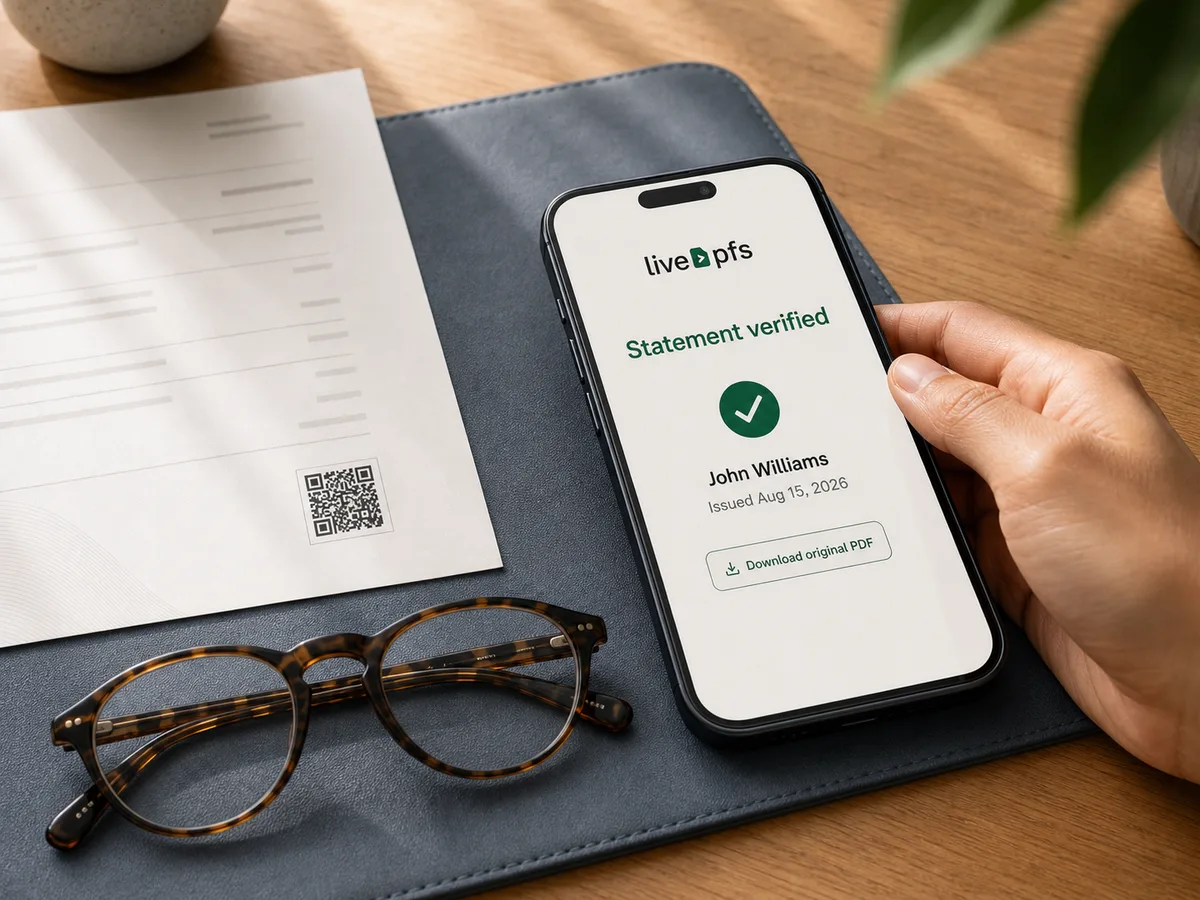
How to fill out a personal financial statement
Step-by-step: pick an as-of date, value assets at market, list liabilities at payoff, compute net worth, and avoid the mistakes lenders notice most.

SBA Form 413, explained
What SBA Form 413 is, who must complete it for 7(a) and 504 loans, what each section asks for, and how to keep it current through underwriting.
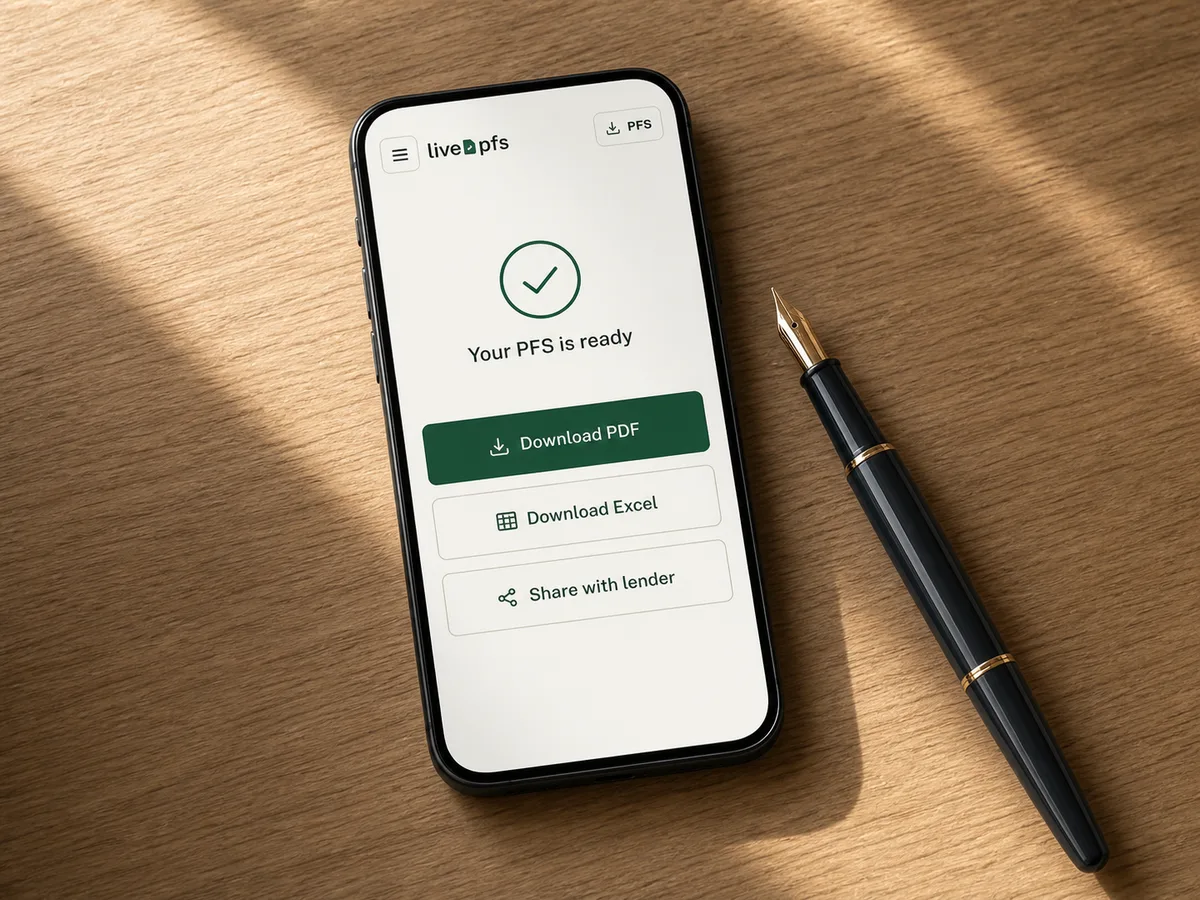
The real estate investor’s personal financial statement
How real estate investors prepare a PFS lenders trust: the schedule of real estate, LLC ownership, credit lines and PALs, and current mortgage balances.
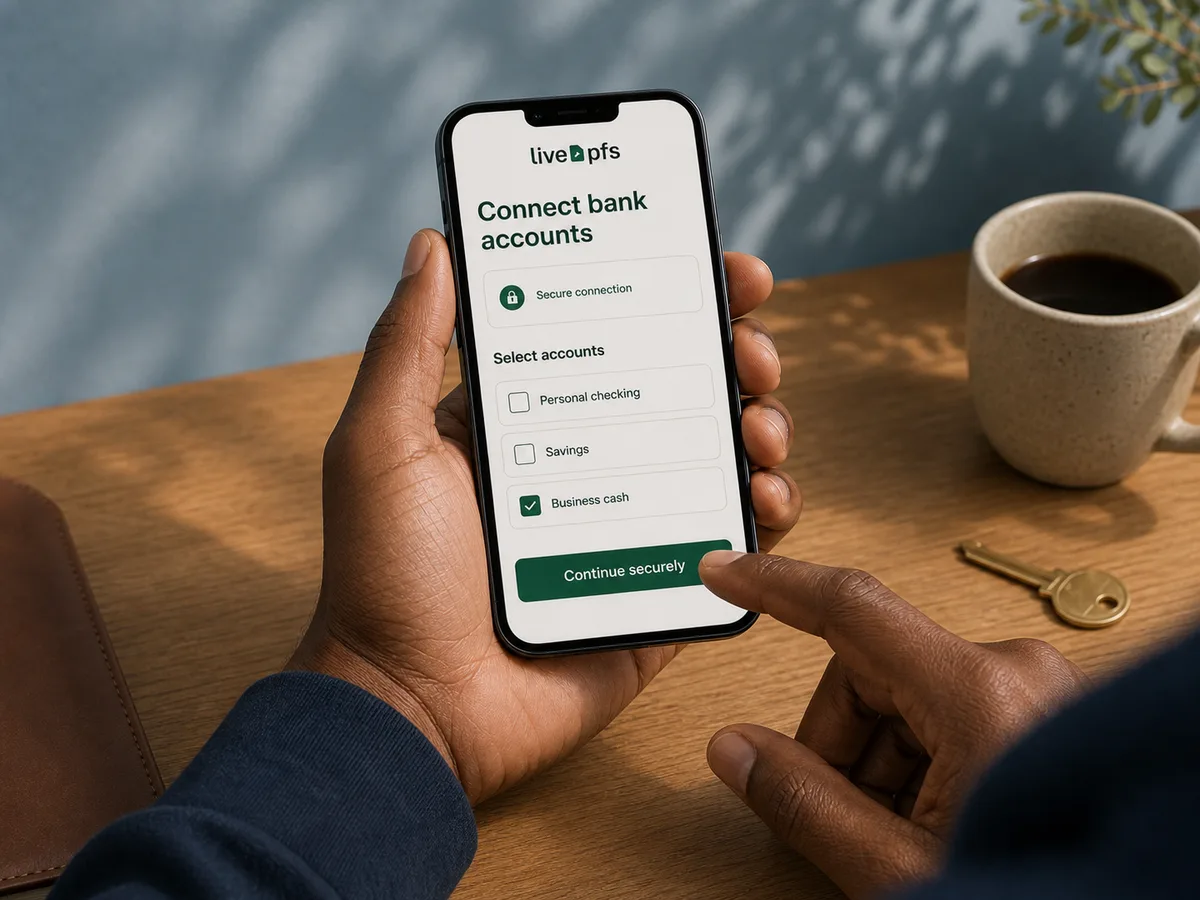
How often should you update your personal financial statement?
Lenders generally treat a PFS older than 90 days as stale. When to update yours — underwriting, covenant cycles, life events — and how to stay current.

Personal financial statement templates: blank forms, spreadsheets, or software
An honest comparison of blank PFS templates, spreadsheets, and software — where each fits — plus the standard PFS structure you can use freely.
Inside the statement
Net worth statement vs. personal financial statement: what’s the difference?
A net worth statement and a personal financial statement share the same math. What each term means, what a PFS adds, and which one your lender actually wants.
Contingent liabilities on a personal financial statement
Guarantees, co-signed loans, and pending claims belong in the contingent liabilities section of a PFS. What counts, how to present it, and how lenders read it.
How to value real estate on a personal financial statement
Real estate on a PFS goes in at current fair market value you can support — appraisal, comps, or a consistent method. How to pick the number lenders believe.
Updating your personal financial statement after buying property
A property purchase changes nearly every line of a personal financial statement — cash, assets, debt, income. What to update, at what values, and when.
Verification and guarantees
How lenders verify a personal financial statement
A PFS is self-reported, not unchecked. How lenders verify it: credit reports, bank and brokerage statements, tax transcripts, appraisals, and public records.
The personal guarantee, explained
A personal guarantee makes you personally liable if your business can’t pay its debt. Where it’s required, the forms it takes, and what it means for your PFS.
The PFS by loan type
The personal financial statement for SBA 7(a) loans: a checklist
SBA 7(a) lenders collect a personal financial statement from every 20%+ owner and guarantor. The checklist: who files, what to gather, and what slows approval.
The personal financial statement for commercial real estate loans
CRE lenders read a sponsor’s personal financial statement for net worth, post-closing liquidity, and global exposure. What they expect and how to present it.
The personal financial statement for construction loans
Construction lenders underwrite the sponsor hardest of all: liquidity for overruns, completion guarantees, and a PFS that stays current through the draw period.
The personal financial statement for a business line of credit
Banks collect a personal financial statement from owners and guarantors for a business line of credit — and again at every annual renewal. What to expect.
Comparisons
Done reading about it?
Connect your accounts read-only and keep one lender-ready statement.
Eligible new subscribers: 7-day free trial, then $190/year for Standard or $290/year for Pro. Card required. Cancel anytime in the first 7 days and you won’t be charged. Compare plans